

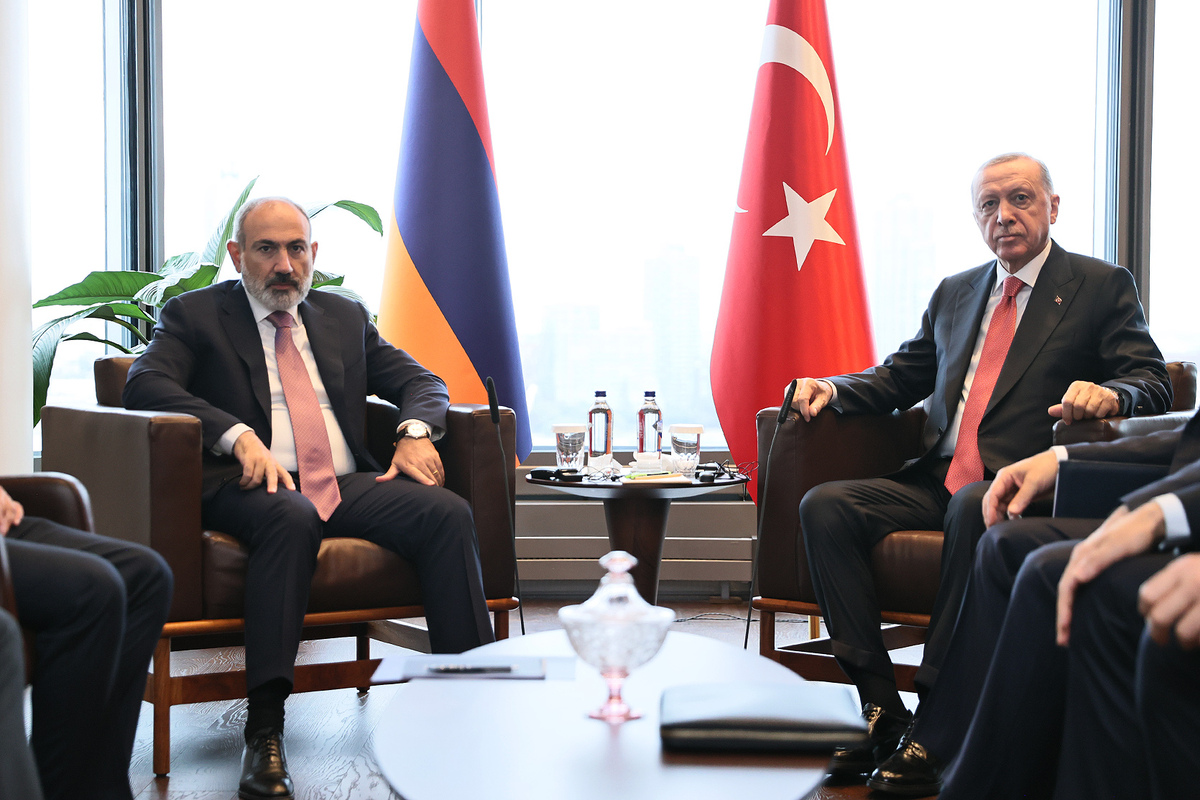
Turkey is weighing the possibility of reopening its land border with neighbouring Armenia “within the next six months”, Bloomberg reported on Thursday.
The borders between the two countries have remained closed despite the 2022 agreement on normalizing the relations, which also includes opening of the shared border for third nationals. The agreement signed between Ankara and Yerevan in 2022 stipulates that diplomats and citizens of third countries can cross the shared border between them. Nevertheless, Turkey continued to keep the border closed.
After the Armenian and Turkish special envoys for normalising relations met in September — first at the shared border and later in Yerevan - Armenia’s Foreign Ministry said both sides had agreed to speed up efforts to reopen the crossings, which Turkey sealed in 1993 during the First Nagorno-Karabakh War. It remains uncertain whether the border will be fully reopened or only partially restored in line with the 2022 arrangements.
Bloomberg’s sources also indicated that Turkey may only name an ambassador to Armenia and restore diplomatic relations once Armenia and Azerbaijan formally conclude a peace agreement, which Ankara anticipates could be signed in the first half of next year.
Turkish Foreign Minister Hakan Fidan stated in November that normalising relations too early would “remove Armenia’s main incentive to sign a peace deal.” He added that Ankara wishes to avoid the emergence of a new frozen conflict in the region. Armenia and Azerbaijan initialled a peace accord in Washington on 8 August, a major milestone toward resolving the long-running Nagorno-Karabakh dispute. However, Baku insists it will not sign the final agreement unless Armenia amends its constitution, which Azerbaijani officials argue contains territorial claims against Azerbaijan. Bloomberg noted that a diplomatic breakthrough with Baku and the reopening of the Turkish border could provide Armenian Prime Minister Nikol Pashinyan with a significant political boost ahead of the 2026 parliamentary elections, after which the peace treaty could potentially be finalised.
Neither the Armenian nor Turkish foreign ministries commented to Bloomberg.
At the end of November, Armenia hosted another meeting between Armenian and Turkish officials at the Akyaka–Akhurik crossing point and later in Gyumri. According to Armenian envoy Ruben Rubinyan, the discussions focused on the “second stage of technical talks aimed at rehabilitating and reactivating the Kars–Gyumri railway,” as reported by Armenpress.
Meanwhile, in early December, EU Commissioner for Enlargement Olivér Várhelyi announced that talks were underway to establish a four-party working group — including Armenia, Azerbaijan, Turkey, and the EU — to develop regional connectivity infrastructure.

Comments
Leave a Reply
Your email address will not be published. Required fields are marked *