

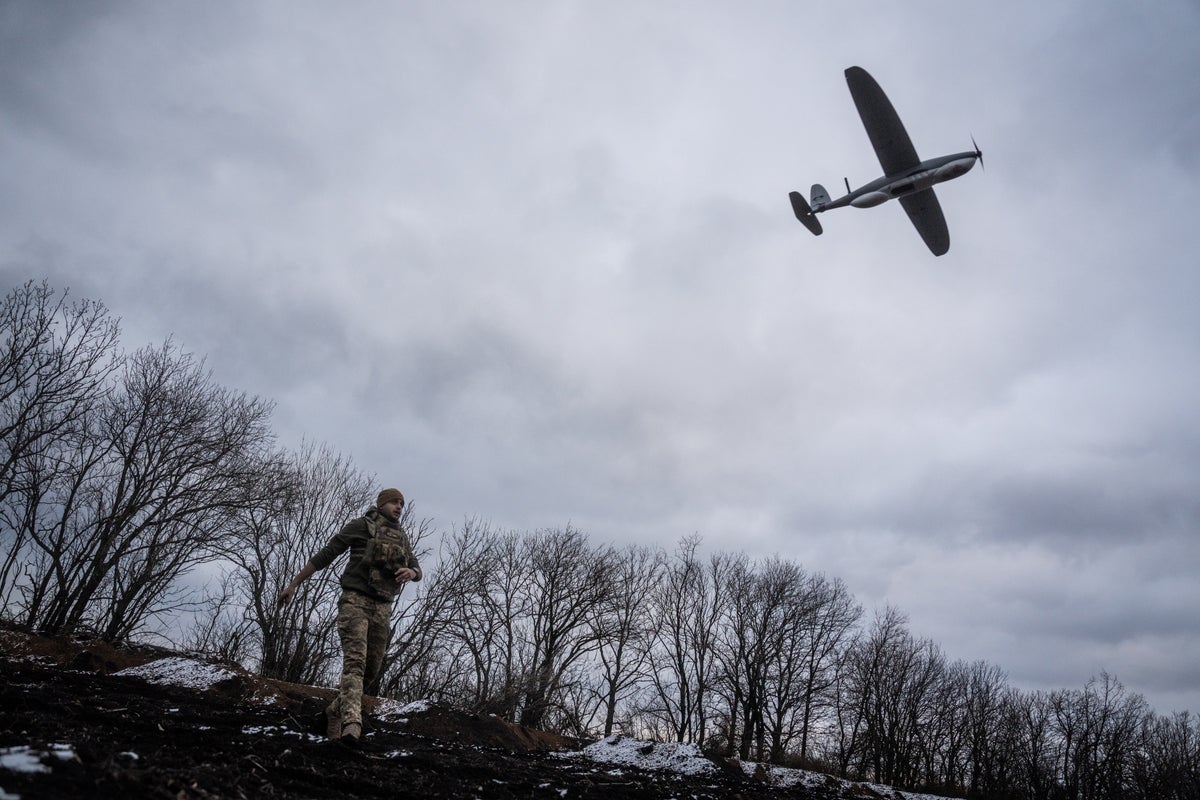
In a first known case since the start of the war in February 202, Ukrainian troops have destroyed a bridge with the use of drones in Russian-held southern Kherson region, the Telegraph reported on Thursday.
According to the publication, the operation was carried out in early 2025 but had not been publicized. The targeted bridge, which crossed a tributary of the Dnieper called Konka, was a critical target. Ukrainian forces deployed British Malloy T-150 drones for two months to destroy the bridge, Telegraph reported. According to the publication, Ukrainian troops sought to strike the bridge with the use of High Mobility Artillery Rocket System, known as HIMARS, for two months but did not succeed. This prompted the command to delegate this task to the 426th regiment of unmanned systems of the Marine Corps of Ukraine. According to the regiment's commander, Colonel Alexei Bulakhov, "the bridges are relatively easy to destroy from below, but they are designed in such a way that they are extremely strong from the outside."
The turning point came when a Russian serviceman shared an image revealing the bridge’s internal design. This gave Ukrainian engineers crucial insight into its weak points, enabling them to carry out highly precise strikes on critical structural components.
Over a period of 60 days, the unit conducted 30 operations, deploying a total of 1.5 tons of explosives and progressively compromising the bridge’s stability. In the end, a final missile strike brought the structure down completely.
Ukraine had significantly expanded its long range strike capabilities since 2025. Overall, Ukraine’s strategy has combined bridge strikes, drone warfare, and air and missile attacks to weaken Russian logistics, reduce mobility, and limit offensive capabilities. Over time, the role of drones has grown significantly, complementing and in some cases replacing traditional airstrike methods.




Comments
Leave a Reply
Your email address will not be published. Required fields are marked *